
Last Call

Unless you've been living under a rock for the past couple of years and at this point, even the rock wouldn't have saved you something has fundamentally shifted in the air. You can feel it in conversations, see it in headlines, sense it in the slightly unhinged energy of people who can't stop talking about it. The term AI is inescapable.
Now look, I'm not here to sell you anything. I'm not an evangelist, not a futurist, not one of those people with a newsletter and a podcast and seventeen half-baked ideas about how this all ends. Well. The podcast part I'll cop to, I had one of those, so maybe I'm not throwing stones from a glass house so much as standing in the rubble of one. But an evangelist I am not. Still, I'd be lying if I told you I wasn't rattled by what I watched it do. I fed it decades old spaghetti code, the kind of poorly written, undocumented, load-bearing mess that every company has buried somewhere and prays nobody has to touch. And it just read it. Untangled it. Explained what the original author was probably thinking, made a reasonable guess at why, and then quietly suggested a cleaner way to do the whole thing. Decades of accumulated technical debt, the sediment of a hundred rushed deadlines, and it waded through it like it was reading a children's book. That's the moment the skepticism cracked. Not the demos. Not the hype. That.
And yet. It can also produce breathtaking, steaming piles of slop faster than the internet can shovel it into its mouth, and the internet, let me assure you, has an enormous mouth. And like every seismic cultural shift before it, people have sorted themselves into their tribes with the speed and conviction of people who have definitely already made up their minds.
There are the die-hards. The true believers. The ones who have gotten so deliriously drunk on the stuff that they've stopped sleeping, stopped eating anything that wasn't suggested by an algorithm, and will corner you at a party to explain, with the wild-eyed enthusiasm of a man who has recently discovered religion, exactly why you should be using it to optimize your morning routine. These people are exhausting. They are also, occasionally, onto something.
Then there are the social drinkers. They've sipped from the bottle. They use it when it's useful, put it down when it isn't, and don't feel the need to build a personality around it. These are, in my experience, the most quietly dangerous people in any industry right now. You won't hear them talk about it much. You'll just notice, eventually, that they're getting more done than everyone who won't shut up about it.
And then there are those who utterly refuse to drink. Who see the whole thing as a parlor trick dressed up in a lab coat. Who will tell you, with great conviction, that it can't really think and they're not entirely wrong, which is exactly what makes the whole conversation so interesting and so maddening all at once.
The bar is open. The question was never really whether you'd take a drink. It was always what you'd do after.
I waded into the slop cesspool slowly, carefully, and with the kind of heavy skepticism that comes naturally to anyone who has watched enough technological revolutions promise everything and deliver a slightly better version of what already existed. I am, by my own admission, a man with an old man's instinct to eye anything new and shiny with profound suspicion. But even a skeptic runs out of reasons eventually. Here's the part I can't talk myself out of. It's here. It's not a prototype anymore, not a party trick, not something your nephew demos at Thanksgiving to impress people who don't know any better. It's a relatively mature product that is getting measurably, sometimes uncomfortably better on what feels like a weekly basis. Problems that were too tangled and too complex even a few months ago are now being dispatched by the modern models with the kind of breezy nonchalance that makes you stop, set down your coffee, and quietly reconsider some assumptions you had about the next decade.
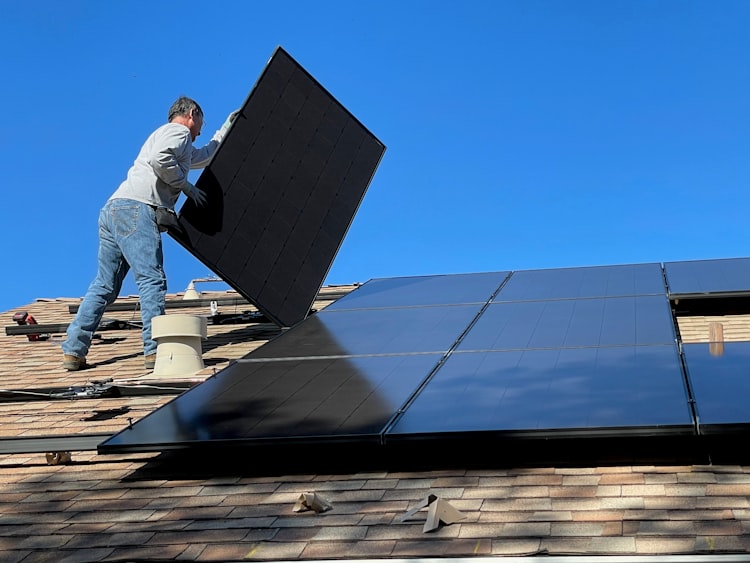
So yeah, I use it. In fact I use it constantly, unabashedly, and with the same willful ignorance that allows a person to enjoy a great meal without reading the kitchen's health inspection report. Because here's the thing I know and mostly choose not to dwell on, the environmental tab for this particular party is significant. The power consumption, the water, the infrastructure humming away in some desert data center just to help me write a cleaner function or think through a problem, it's not nothing. Not even close to nothing. But I have made my peace with that the way you make peace with most uncomfortable truths. Carefully, and from a slight distance. And with a little perspective, because we've seen this movie before. Take solar. For years every conversation about it came loaded with reasons it could never work, too expensive, the wrong materials, not efficient enough, it kills birds, pick your objection. Some of those concerns were real. Most of them, real or not, got quietly solved over time, the way these things tend to once enough people decide the thing is worth solving. The cost curve bent. The technology matured. The birds, by and large, are fine. I suspect the heavy environmental tab on all of this gets paid down the same way, not because anyone waved a wand, but because the pressure to fix it eventually outweighs the convenience of ignoring it.
What we are living through right now has the feeling of an open bar that everyone quietly knows is about to close. The drinks are still flowing. The good stuff is still on the shelf. Nobody's been handed a bill yet. And every person in the room, if they're honest, understands that this particular arrangement is temporary, even if no one is saying it out loud. So the intelligent move, the only move really, is to drink deeply and deliberately while the pour is still generous. Because it won't stay free. Nothing worth having ever does. The bill always comes, it just doesn't always announce itself in advance. The trick is to have already gotten what you needed before the bartender calls last call and the check hits the table.
Will I see this again? This specific flavor of chaos and possibility all arriving at once? I honestly don't know. It feels like those first few years of the iPhone when the thing in your pocket was genuinely, almost daily, becoming something different than it was the week before. When nobody had fully figured out the rules yet because the rules were still being written in real time. It was loud and messy and occasionally absurd and completely, undeniably alive in a way that the mature, polished, expensive version that followed could never quite replicate.
That window closed. It always closes. The pace slowed, the prices climbed, the wonder got quietly replaced by expectation. And so here we are again, standing at what feels like the same kind of precipice. Older this time. A little more aware of how fast the window shuts. The question isn't whether it will end. It's whether you were paying enough attention while it was open.
Member discussion